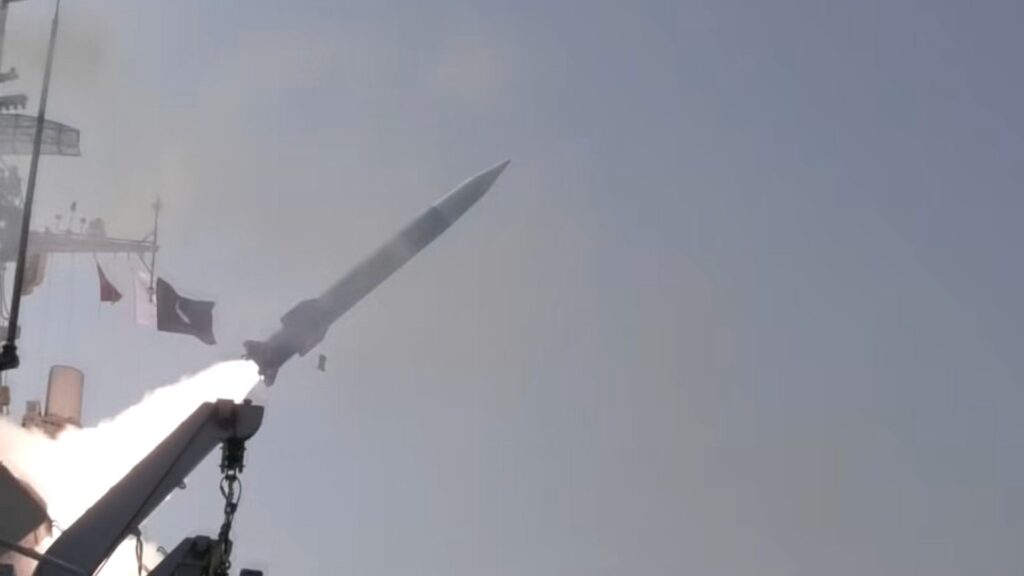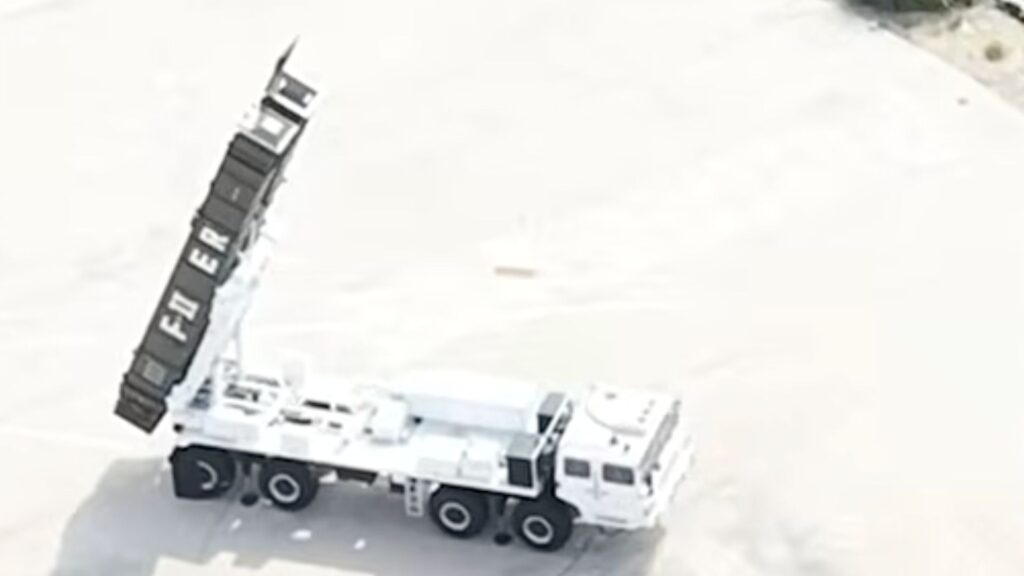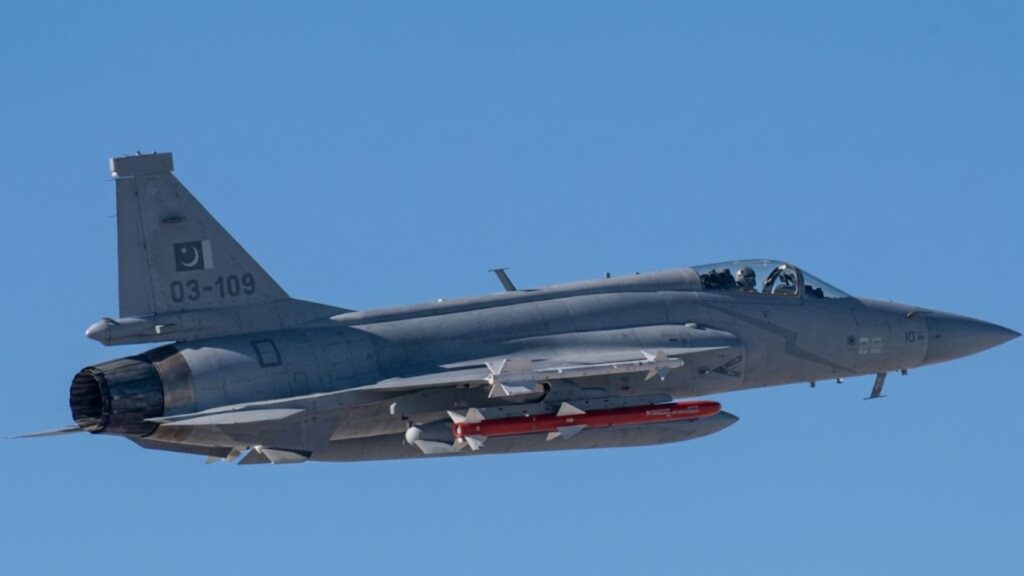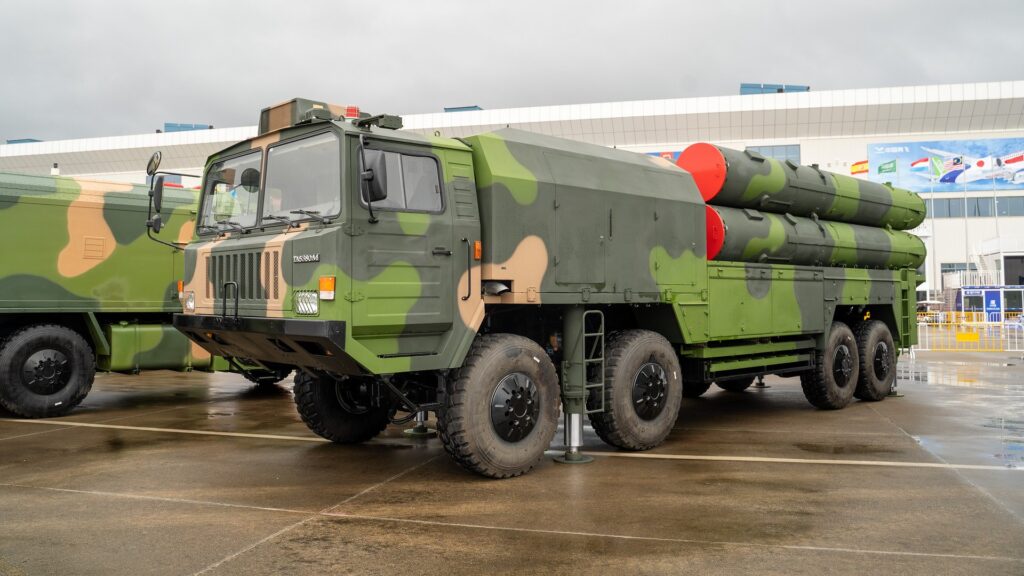
The Pakistan Army formally inducted the LY-80 (HQ-16) medium-range surface-to-air missile (SAM) system on 12 March 2017.
In an official press release, the armed forces’ media arm Inter Services Public Relations (ISPR) states that the LY-80 “is a Chinese mobile air defence system, (sic) capable of tracking and destroying variety of aerial targets at longer ranges flying at low and medium altitude.” The HQ-16 is produced by China Precision Machinery Import and Export Corporation (CPMIEC).
Go deeper into the defence market.
Research on procurement, emerging technology and the industry behind the news.
As per Army Recognition, the HQ-16 has a maximum range of 40 km and is capable of engaging targets at an altitude of 400 to 10,000 metres. The HQ-16 system comprises of an IBIS-150 3D target-search radar, a solid-state S-band passive electronically-scanned array (PESA) radar with a range of up to 150 km, multiple L-band tracking and guidance PESA radars, and six-cell vertical missile-launchers. Each L-band tracking radar has a range of 85 km, and can detect up to six targets, of which it can track four. An HQ-16 battery comprises of a tracking radar and four missile launchers.
It should be noted that China Aerospace Long-March International (ALIT), a privately-owned defence firm responsible for marketing Chinese defence goods and securing sales, states that the LY-80 has a maximum range of 70 km. It appears that the improved HQ-16B is available for export, and this may be – or become – a factor in the Pakistan Army’s air defence development plans.
Notes & Comments:
Pakistan made at least two separate HQ-16 orders. As per the Pakistan Ministry of Defence Production’s (MoDP) disclosure, Pakistan ordered three HQ-16 systems and eight IBIS-150 radars in 2013-2014 for USD $225.77 million and $40 million, respectively. This was followed up in 2014-2015 with a $373.23 million order for six additional HQ-16 systems.
Although the number of launchers in use in each Pakistani HQ-16 SAM system is not known, it is evident that the HQ-16 has become the armed forces’ mainstay medium-range SAM system. Alongside the newly inducted FM-90/HQ-7 command-line-of-sight short-range SAM, the Pakistan Army has formed a complete low-to-medium-range air defence system (LOMADS).
To complete its air defence network, Pakistan has been seeking a long-range SAM system. The CPMIEC HQ-9’s export variant, the FD-2000, appears to be the likeliest option. The FD-2000 has a range of 125 km. However, a high-level Pakistani official reportedly told the Russian news agency RIA Novosti that Pakistan was also interested in Russian SAM systems, particularly the S-400. Fiscal limitations and uncertainty will likely compel Pakistan to address its long-range SAM requirements in collaboration with China.