pierswalker71
Selected Projects
A curated selection of projects demonstrating how data science, AI-enabled tools and systems thinking can be applied to practical operational problems.
The emphasis is on useful, credible work shaped by real workflows, organisational constraints, stakeholder needs and decision-making contexts. These projects vary in scope and method, but each demonstrates some combination of problem framing, data preparation, analytical design, interactive tooling, modelling, automation or operational decision support.
The aim is not to present isolated code samples. It is to show how analytical and AI-enabled approaches can be embedded into systems that people can use, trust and understand.
Chronos Forecasting Tool
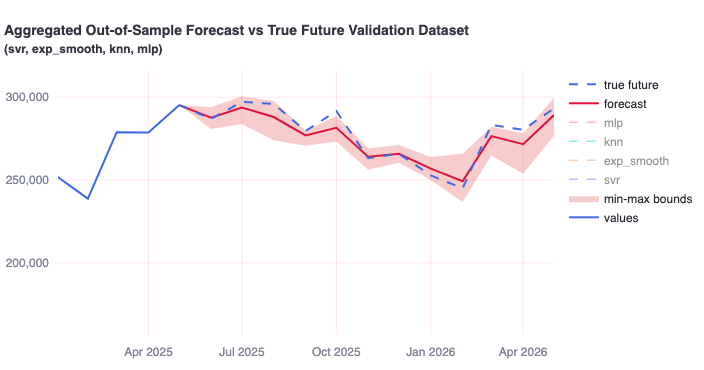
An interactive forecasting tool that trains an ensemble of machine learning models on historical time series data and combines their predictions into a single forecast with confidence bounds.
The tool guides users through a structured workflow — uploading data, checking quality, setting a forecast horizon and running the ensemble — with automated model tuning, cross-validated back-testing and interpretable results. Forecast uncertainty is communicated visually through confidence bands derived from the spread of individual model predictions.
It is designed to give analysts and planners a rigorous, evidence-based forecast without requiring any knowledge of machine learning.
Domain: Operations, planning, demand forecasting
Problem type: Time series forecasting, ensemble modelling
Users: Analysts, operational planners, service managers
Methods: Ensemble machine learning, cross-validation, automated hyperparameter optimisation
Tags: Forecasting Time series Ensemble modelling Decision support Streamlit app
👉Read project case study
School Allocation Tool
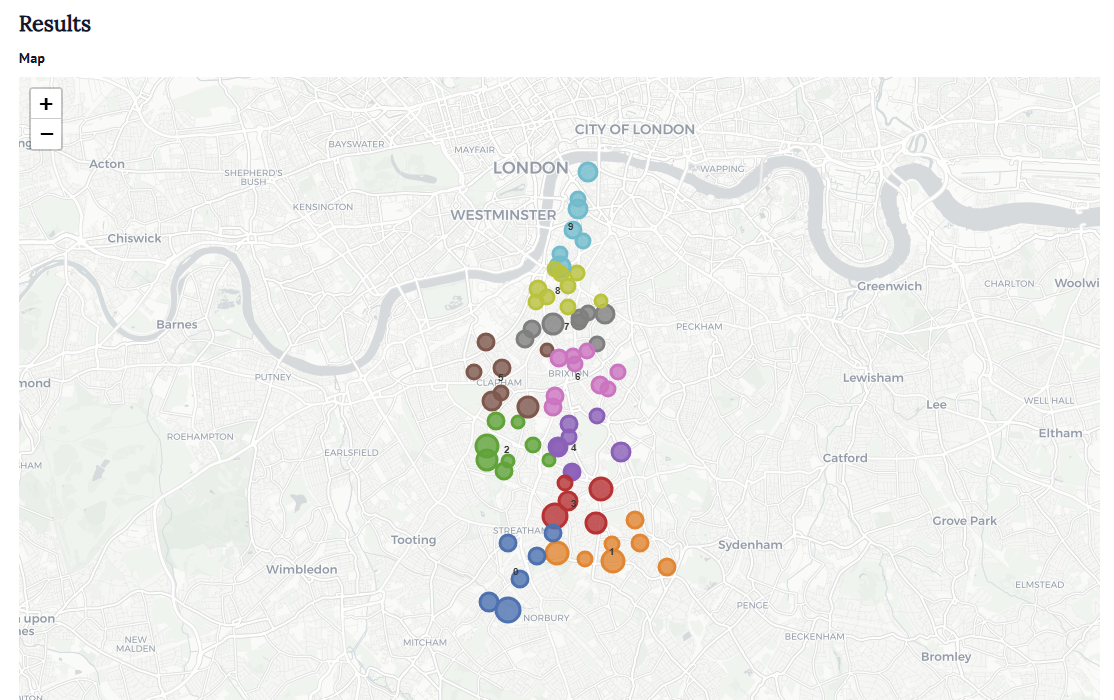
An interactive app designed to help local authorities create fair, geographically coherent and defensible school allocation groups.
The tool combines school-level data with official location information and generates proposed groups that balance school counts, pupil numbers and geographic practicality. Users can adjust assumptions, review summary metrics and inspect the proposed allocation on an interactive map.
It is designed as a decision-support aid to give officers a useful starting point for scenario planning, discussion and refinement.
Domain: Local government, education
Problem type: Operational allocation, decision support
Users: Local authority officers, service managers, education teams
Methods: Rule-based sorting and distribution, geospatial review, scenario testing
Tags: Decision support Local Authority Operational planning Marimo app
👉Read project case study
Simulation Optimisation
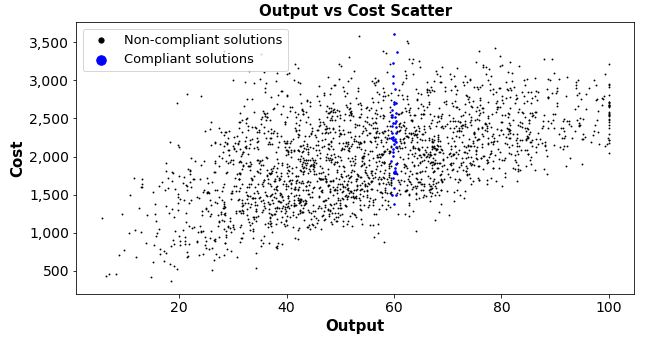
A prototype decision-support workflow showing how simulation, machine learning and optimisation can be combined to identify low-cost ways of achieving a target operational outcome.
The project treats a simulator as a black box, generates data from a range of input combinations, trains a surrogate regression model to approximate the simulator’s behaviour, and then uses optimisation to search for input settings that meet a target output at minimum cost.
It demonstrates how an organisation could move beyond manually testing individual scenarios towards a more systematic approach for resource planning, cost reduction and operational decision-making.
Domain: Operations, resource planning, simulation modelling
Problem type: Simulation optimisation, cost-aware decision support
Users: Analysts, operational planners, service managers, decision-makers
Methods: Simulation, surrogate modelling, regression, global optimisation, scenario testing
Tags: Decision support Simulation optimisation Surrogate modelling Operational planning Python