Log inSign up
Log inSign up
Bram Stein
2,127 posts
Bram Stein profile banner
@bram_stein

Bram Stein

@bram_stein
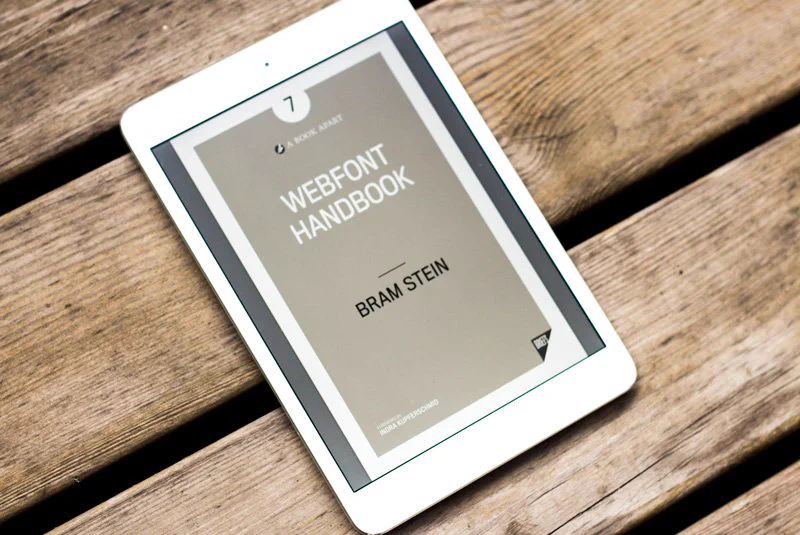
Author of the Webfont Handbook: abookapart.com/products/webfo… Tweets on web typography and front-end development.
Copenhagen, Denmark
Joined September 2009
312 Following
2,615 Followers
RepliesRepliesRepostsRepostsMediaMedia

Log in or sign up for X

See what’s happening and join the conversation

Continue with phone
or
Log in with username or email
Terms·Privacy·Cookies·Accessibility·US TIDA·Ads Info·© 2026 X Corp.
  • Pinned
    @bram_stein
    Bram Stein
    @bram_stein
    Sep 5, 2017
    It’s here! Go buy the Webfont Handbook and learn about rendering, licensing & optimising your webfont loading! abookapart.com/products/webfo…
    8
  • @bram_stein
    Bram Stein
    @bram_stein
    Sep 26, 2022
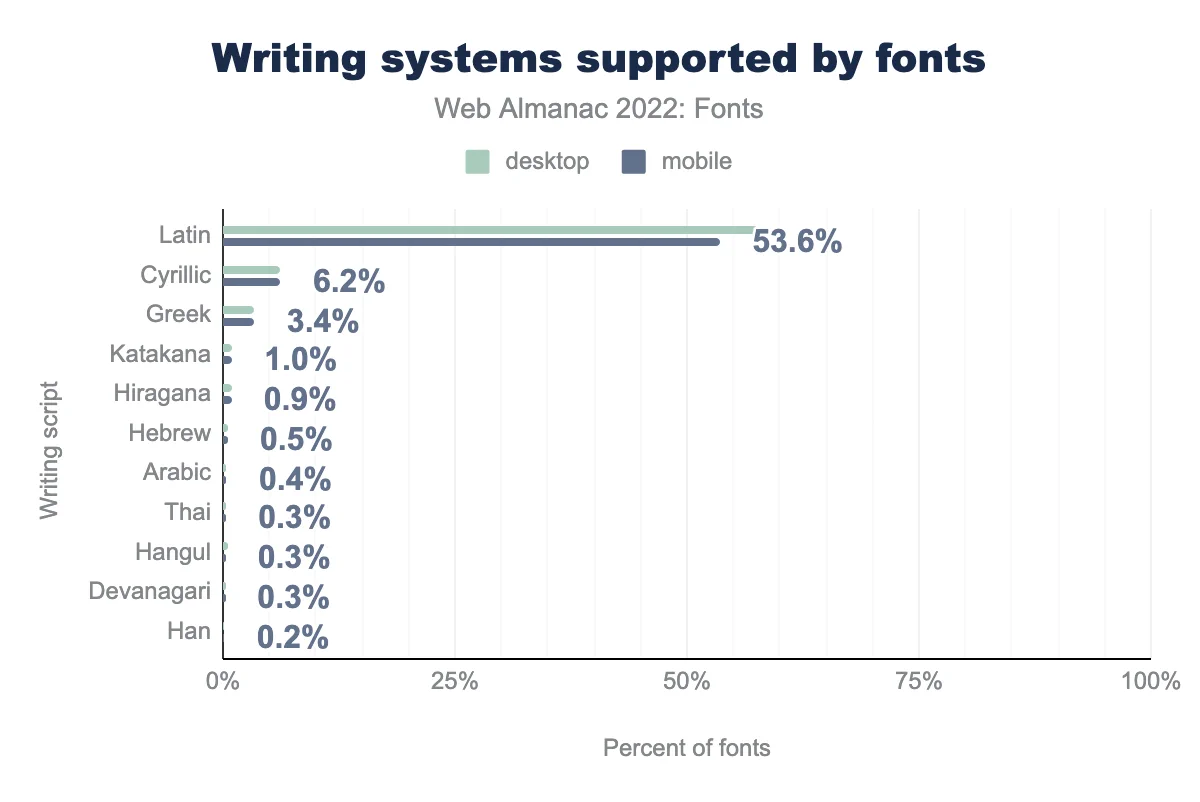
    Slightly over half of web fonts support (a significant subset of) the Latin writing system. Unfortunately, other writing systems are underrepresented on the web compared to their use in the world. almanac.httparchive.org/en/2022/fonts#…
    Bar chart showing Latin is used on 57.6% of desktop pages and 53.6% of mobile pages, Cyrillic on 6.1% and 6.2% respectively, Greek on 3.4% and 3.4%, Katakana on 0.9% and 1.0%, Hiragana on 0.9% and 0.9%, Hebrew on 0.5% and 0.5%, Arabic on 0.3% and 0.4%, Thai on 0.2% and 0.3%, Hangul on 0.5% and 0.3%, Devanagari on 0.2% and 0.3%, and finally Han is on 0.2% of desktop and mobile pages.
    3
  • @bram_stein
    Bram Stein
    @bram_stein
    Sep 26, 2022
    A whopping 73% of sites set -webkit-font-smoothing: antialiased to change how text is rasterized on MacOS. Do people really dislike the default way MacOS rasterizes text, or are lots of people including CSS libraries that set it by default?
    Bar chart showing -webkit-font-smoothing: antialiased is used on 74% of desktop and 73% of mobile pages, -moz-osx-font-smoothing: grayscale on 67% and 66%, -webkit-font-smoothing: auto on 13% and 12%, and finally -webkit-font-smoothing: subpixel-antialiased is used on 13% of desktop and 13% of mobile pages.
    13
  • @bram_stein
    Bram Stein
    @bram_stein
    Sep 26, 2022
    Slightly over 99.99% of variable fonts use TrueType glyph outlines. Not a good look for the CFF2 format six years after it was standardized. Perhaps time to deprecate it? almanac.httparchive.org/en/2022/fonts#…
    An image showing 99.99% of variable fonts used TrueType outlines.
    2
  • @bram_stein
    Bram Stein
    @bram_stein
    Sep 26, 2022
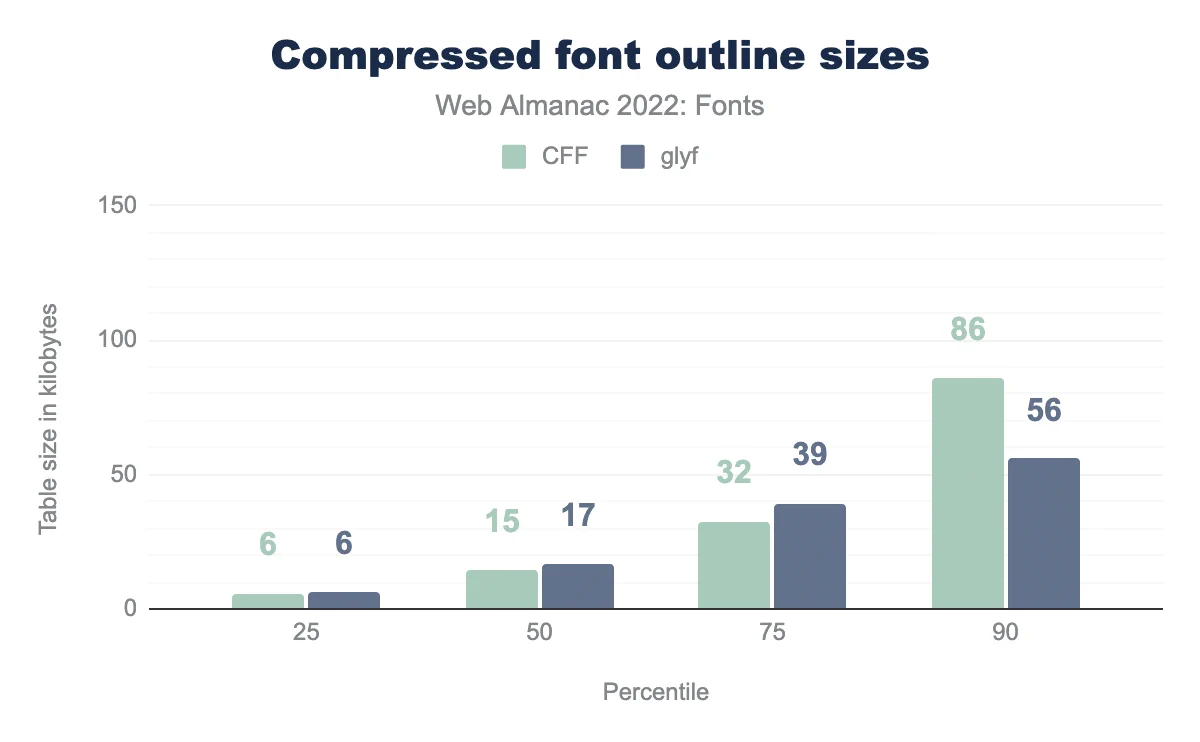
    Nearly 91% of web fonts use TrueType glyph outlines while only 9% use CFF glyph outlines. After compression TrueType and CFF based fonts have nearly identical file sizes (and for larger fonts TrueType outlines produce smaller compressed file sizes). almanac.httparchive.org/en/2022/fonts#…
    Column chart showing at the 25th percentile both CFF and glyf font sizes are 6 KB, at the 50th percentile they start to diverge with CFF 15 KB and glyf 17 KB, at the 75th percentile it’s 32 and 39 KB respectively, and finally at the 90th percentile it’s CFF is 86 KB and glyf is only 56 KB.