

An independent, ad-free leftist magazine of critical essays, poetry, fiction, and art.
-
![Palestinian Resistance Literature Under Occupation, 1948–1968 [Excerpt]](https://proteanmag.com/wp-content/uploads/2026/10/Kanafani_Cover-1-copy.png)
Palestinian Resistance Literature Under Occupation, 1948–1968 [Excerpt]
Today we are honored to publish two short excerpts from the forthcoming translation of Palestinian revolutionary and writer Ghassan Kanafani’s “Palestinian Resistance Literature Under Occupation, 1948–1968,” alongside a poem by Palestinian poet Mahmoud Darwish.
-
On World-Building: Lessons From a Martyred Teacher
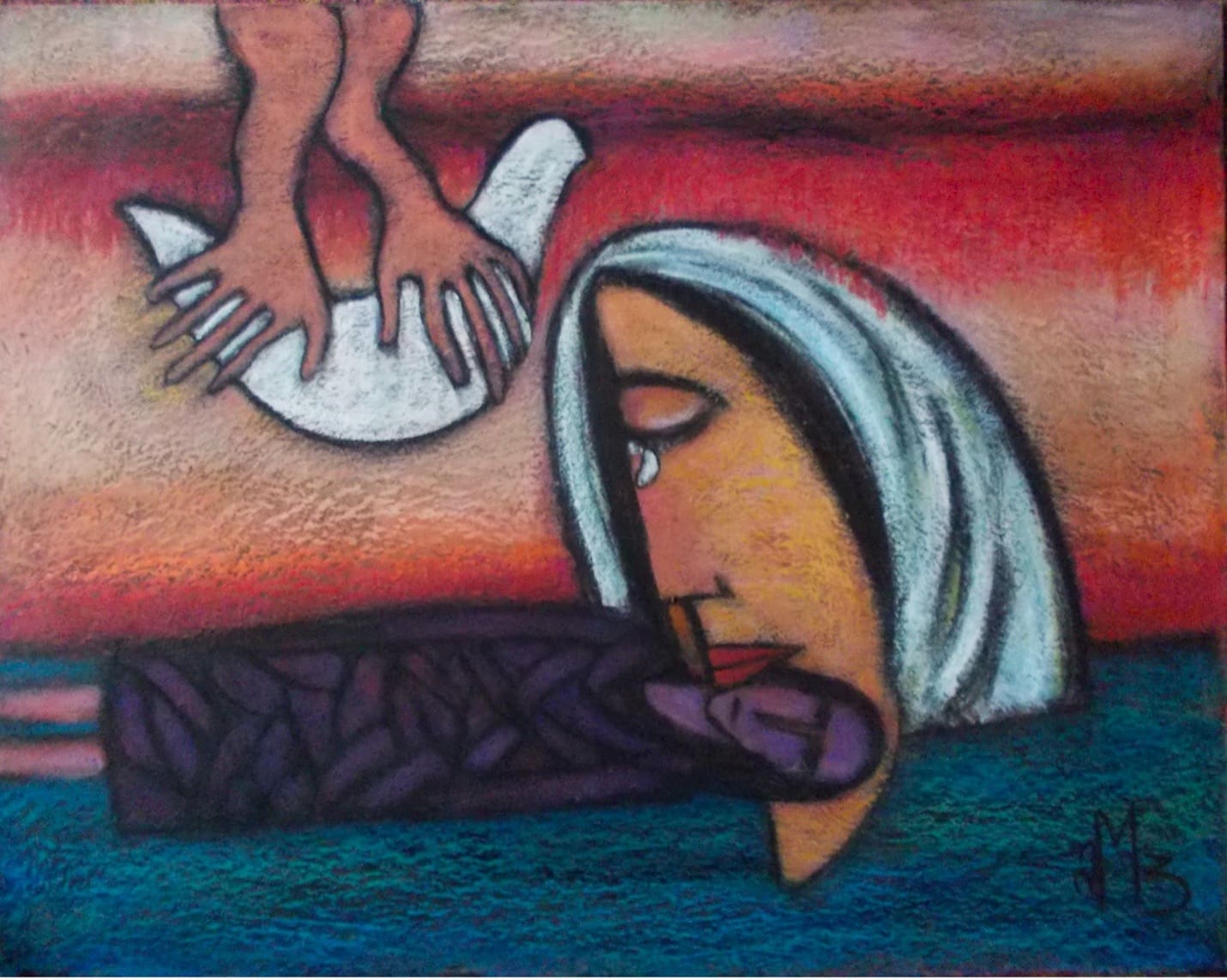
Bayan Haddad once taught literature to Oudeh Hathaleen, who would become a teacher himself, as well as Palestinian community advocate and consultant on the Oscar-winning documentary No Other Land. In July, Oudeh was murdered by an Israeli settler. Haddad reflects on the lessons taught by colonial violence.
-

Tom Overton on John Berger: From Life
Andrew Holter interviewed Tom Overton, author of a new biography, “John Berger: From Life,” out from Verso Books. In this fascinating discussion, Overton discusses his friendship with Berger, the biography’s literary approach, Berger on Palestine, and future plans for scholarship…
-

The Enemies of 1776
In “The Enemies of 1776”, Dylan Saba traces the long history of the US’s genocidal wars and pacification operations in the global frontier—from the Indian Wars, to the War in Vietnam, to the Israeli-US genocide in Gaza.


-
The Latest
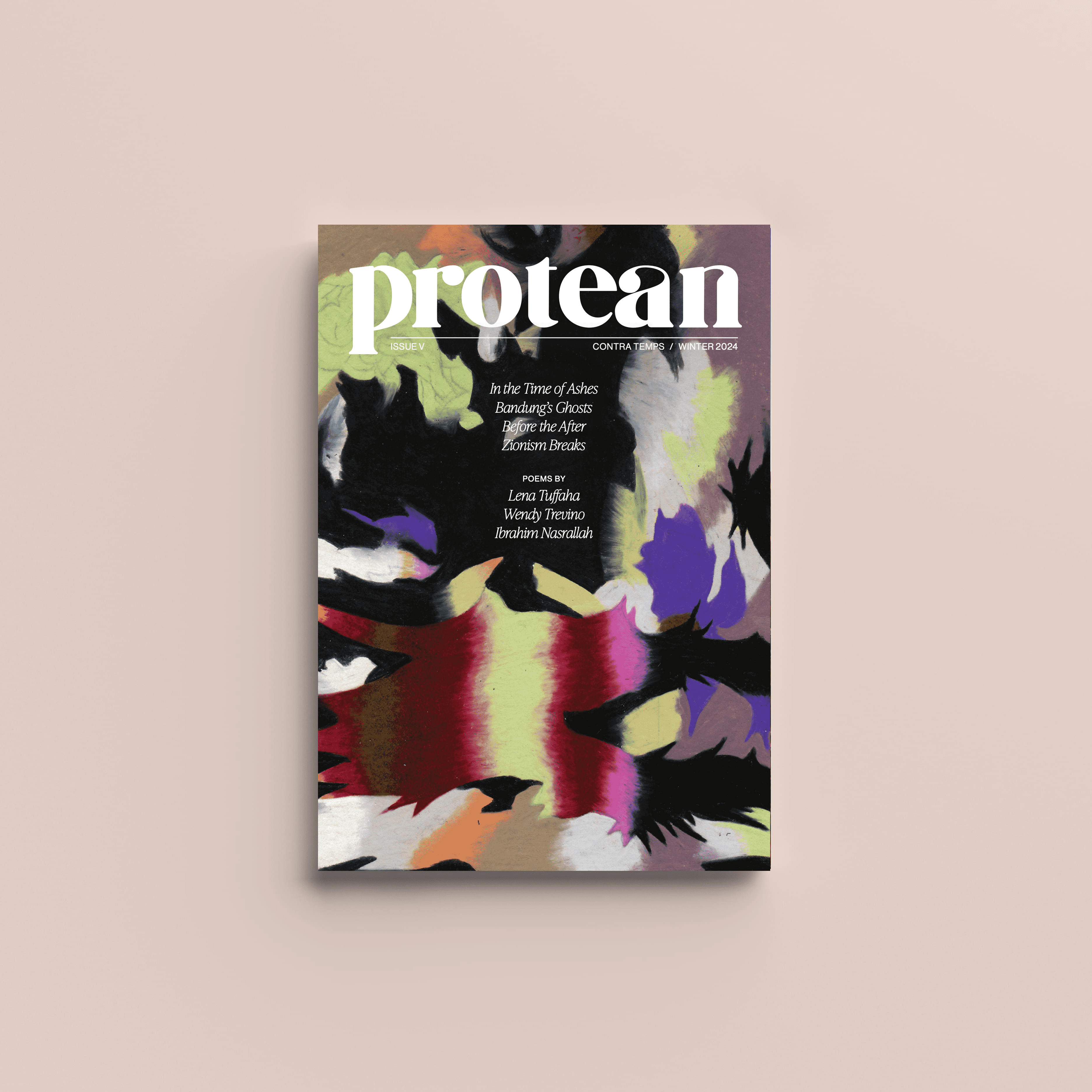
Protean Magazine Issue V: Contra Temps
-
Solidarity in the Age of Service Work
Flora Arnold and Lauren Hough review Annie McClanahan’s “Beneath the Wage: Tips, Tasks, and Gigs in the Age of Service Work.” Often assumed to be contemporary features of labor, McClanahan argues, modes of non-waged service and care work—feminized, racialized, and invisibilized—have in fact been essential to the development of capitalism.
-
“What you, my good Israelis, said”: Sabri Jiyris’s The Foundations of Zionism
Sasha Frere-Jones reviews the new edition of Palestinian writer and lawyer Sabri Jiyris’s “The Foundations of Zionism” (translated by his daughter Fida). As Jiyris tells Frere-Jones: the book “is what you, Israelis, my good Israelis, said”
-
Hyperpolitics? Yes, Please
Alex Colston reviews Anton Jäger’s “Hyperpolitics,” filling in gaps in the book’s short argument and arguing for the importance of political formations and activities independent of official political society.
-
The Same Battle, Again
A.C. Corey unpacks the misguided revolutionary and cinematic hopes pinned on Paul Thomas Anderson’s “One Battle After Another”—each an expression of left melancholia and mania, of political and cultural restlessness, of the fantasy of resolution.
-
The Workplace Arms Race
Shane Boyle reviews Craig Gent’s Cyberboss: The Rise of Algorithmic Management. “Rather than representing a step towards scientific perfection, algorithmic management is simply the latest episode in capital’s interminable struggle to subjugate labor.”
-
Horizons of Youth Liberation
Sarah Brouillette reviews Madeline Lane-McKinley’s newest book, Solidarity With Children, from Haymarket. Lane-McKinley’s text conceptualizes the full scale of injustice perpetrated against children worldwide. By invoking Marxist-feminist theory, interpreting cultural texts, and critiquing sociopolitical conditions, Lane-McKinley surveys the horizons of a world in which children are no longer regarded as…
-
Andrew Holter interviewed Tom Overton, author of a new biography, “John Berger: From Life,” out from Verso Books. In this fascinating discussion, Overton discusses his friendship with Berger, the biography’s literary approach, Berger on Palestine, and future plans for scholarship on and republication of Berger’s many works.
-
In this long conversation, Mary Turfah talks with Dr. Ghassan Abu Sittah about health sovereignty in Palestine, the coloniality of Western NGOs, the centrality of healthcare to the genocide in Palestine, and much more.
-
Richard Hell’s novel Godlike has just been re-released with a new afterword by New York Review Books. Andrew Holter spoke to Hell on his literary trajectory as a novelist and street poet, the sometimes-guiding examples of Rimbaud and (Tom) Verlaine, various noms de plume, the New York School poets, and his fearlessness of influence.
-
In this extensive, wide ranging interview, Laleh Khalili speaks with Thea Riofrancos about her new book Extraction: The Frontiers of Green Capitalism, the political economy of lithium mining, the possibility of a just climate transition, and more.
-
Andrew Holter interviews Mitchell Abidor on Abidor’s new book, Victor Serge: Unruly Revolutionary, out from Pluto Press. “It seems like we in the English-speaking world, at least, have misunderstood some pretty important things about him”—including what Abidor argues was his late-life turn to reactionary anti-communism.
