Custom Database Development Services
Our database development services
Database consulting
Our experts help you to choose the right database architecture and tech stack based on your requirements. We analyze your data characteristics, workload patterns, scalability and performance needs to create a high-level database strategy and roadmap.
- Evaluate current database environment and identify gaps
- Compare database technologies, deployment models, and TCO
- Provide vertical/horizontal scalability and capacity planning guidance
- Recommend appropriate database technologies and standards
- Assess database governance, security, and compliance practices
Database development
Within our custom database development services we deliver solutions for distributed and enterprise environments, including mainframe databases. Our experts perform database design, create scalable data models, and implement security and access controls.
- Create efficient schema design to ensure data integrity
- Design databases for microservices, enabling scalable data management
- Optimize indexing strategy to improve query execution
- Implement clustering, sharding, and replication strategies
- Develop disaster recovery (DR) plan to protect business-critical data
Database optimization
Whether it is legacy database modernization or query optimization, our engineers analyze database performance and identify optimization opportunities to maintain high availability, reduce data retrieval latency, and accelerate response times.
- Modernize databases through re-hosting, re-platforming, or re-architecting
- Conduct data decomposition to enhance scalability and performance
- Improve database efficiency through caching layers
- Configure connection pooling to optimize database access
- Reorganize fragmented indexes and refine storage layout
Database integration
We integrate databases with business applications, connecting disparate data sources and developing data pipelines to enable seamless data exchange. You get a unified view of your operations, increased data consistency, and automated data flows.
- Implement API-driven integrations to connect databases with apps
- Integrate legacy databases with modern applications
- Consolidate data across multiple platforms
- Configure data synchronization mechanisms
- Monitor and optimize data integration processes
Database migration
If your database cannot support business growth, fail to integrate with new applications, or meet security/compliance requirements, it might be time to migrate. SoftTeco supports database cloud migration, schema migration, and platform migration to keep your data connected at scale.
- Configure cloud-native database services
- Develop zero-downtime migration strategies
- Conduct legacy database migration to improve scalability
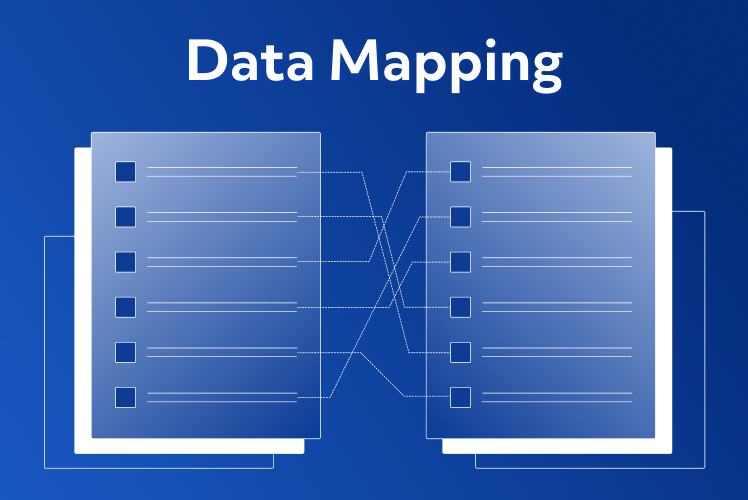
- Transform and map data structures to fit the target environment
- Validate migrated data to verify completeness and consistency
Database support and maintenance
SoftTeco engineers monitor your database solution, carry out performance tuning, and apply database patches and upgrades to safeguard your software from data loss, performance degradation, and downtime.
- Implement SLA/SLO monitoring to maintain reliable operations
- Manage database backups and recovery to protect data
- Resolve emerging database issues to facilitate normal operation
- Perform index rebuilding, statistics updates, and integrity checks
- Assess resource utilization and plan for future growth
Database technologies we specialize in
Relational databases (SQL)
SoftTeco designs, configures, integrates and optimizes relational databases such as MySQL, PostgreSQL, Microsoft SQL Server, and Oracle to support efficient data management, querying, analysis, and retrieval.
Non-relational databases (NoSQL)
Non-relational databases store and manage data in many different formats: IoT sensor data, customer reviews, and app logs. We tailor and optimize solutions built with MongoDB, Cassandra, Redis, and DynamoDB to ensure efficient data storage and high accessibility.
Cloud and distributed databases
Store, manage, and process data across multiple servers, locations, or cloud environments with AWS RDS/Aurora, Azure SQL, Google Cloud Spanner, Cloud Firestore, or Firebase Realtime Database. We enable resilient data management through distributed data and workloads.
Data warehouses and analytics
We design scalable data warehouse architectures using Snowflake, Amazon Redshift, Google BigQuery, ClickHouse to support your business intelligence, reporting, and advanced analytics. You gain a single source of truth across business to make more confident decisions.
Vector databases
Vector databases store and index embeddings to enable similarity search, making them useful for semantic search, recommendation systems, and AI applications.
Graph databases
We design and build graph data models to power your recommendation engines, fraud detection tools, or analytics software. Neo4j, Amazon Neptune graph databases organize data as nodes and relationships, allowing you to uncover hidden patterns.
Embedded databases
SQLite and Realm databases store and manage data locally on the device or within the app for fast and reliable access. SoftTeco designs embedded data models and integrates them into applications, making solutions responsive and enabling offline capabilities.
Need a reliable database fitting your business needs?
We develop scalable and secure custom database solutions that support your business logic, data integrity, and automation needs
Additional data services we offer
Modern database work goes beyond writing schemas and queries – we provide support across the full data cycle.
01 / 03
Data engineering
SoftTeco delivers data engineering services that allow businesses to collect, process, store, and provide reliable data. We develop ETL/ELT data pipelines, design and configure read replicas to improve query performance, and optimize write scalability through partitioning and sharding.
02 / 03
Data modeling
Organized and consistent data is the basis for business analytics and reporting apps. We help organizations to build scalable and maintainable data solutions by defining how data entities, relationships, and rules are represented within databases.
03 / 03
Data security
We deploy security measures to protect your data from unauthorized access, misuse, alteration, loss, or disclosure. Your database remains secure and compliant with organizational policies and regulatory requirements.
Business databases we deliver
Customer database
Stores customer information, interactions, and purchase history, allowing businesses to understand customer needs and deliver personalized experiences.
Sales and marketing database
Includes customer, prospect, campaign, and engagement data, helping organizations to optimize marketing activities and improve sales.
Financial database
Used for accounting, billing, revenue tracking, and financial reporting, with appropriate controls to support regulatory and compliance requirements.
Inventory database
Essential for manufacturing, logistics, and ecommerce, such databases store and manage data about products, stock levels, locations, and movements for accurate inventory control.
Order management database
Stores, organizes, and processes order, customer, product, and fulfillment data which helps businesses manage the order lifecycle and coordinate fulfillment processes.
Ecommerce database
Maintains a single source of truth for online retailers, consumer brands, wholesale and B2B distributors. Improves sales visibility and enables scalable transaction processing.
HR/employee database
Centralizes employee information, workforce records, and organizational data for seamless payroll, hiring, and performance tracking.
Product catalog database
Focused on items, services, and their characteristics, it fits any company with digital/physical product listings, enabling consistent product presentation and efficient sales operations.
Logistics and supply chain database
Organizes and tracks data related to suppliers, inventory, transportation, shipments, and operations for manufacturing, freight, and retail businesses.
Project management database
Used heavily in IT, consulting agencies, and construction, such databases handle project information, resources, tasks, and timelines, supporting efficient project planning and execution.
Calculate your database development team cost
Reduce budget uncertainty with our development team cost calculator. Get a free estimate in 4 easy steps.
Database projects we delivered
SaaS BI database performance tuning
SoftTeco improved the performance of a SaaS BI platform by optimizing its core Microsoft SQL Server database. Through targeted SQL query refactoring and storage tuning, we significantly reduced data retrieval latency and improved overall system scalability. The resolved issues in database performance led to better scalability and more reliable operations.
PostgreSQL modernization for a lighting management system
In the scope of an upgrade for a lighting management system, our engineers modernized the PostgreSQL database for better performance and system scalability. We optimized database schemas through structural redesign, data normalization, index optimization, and query performance improvements, reaching the required support for evolving business requirements. Today, the system automatically retrieves data from over a million controlled luminaires and adjusts lighting configuration accordingly.
Database integration for a ride-sharing registration portal
Our team integrated a database within a driver onboarding portal development project for a ride-sharing company. The solution guides drivers through the onboarding cycle and meets regional compliance requirements. To support the load from flexible rules management, we used Docker and an AWS Load Balancer, allowing the system to handle up to 1,000 registrations per day in a single city.
Tech stack we use for database solutions
Backend






Frontend





iOS

Android


Cross-Platform


SQL

NoSQL

Cloud solutions



DevOps





Machine learning, AI,
data science, big data











Salesforce
CMS





QA automation

Why choose our database development company?
Trusted by our clients

We reached out to SoftTeco, a leader in software development process auditing, to obtain independent confirmation that our development processes align with international standards, including ISO 9001 quality management principles, CMMI process maturity guidelines, and recognized project management practices. The team conducted all the required audit procedures in a structured and transparent manner, and the assessment confirmed the alignment of our development processes with the relevant frameworks and industry best practices. We appreciate SoftTeco's support and efforts throughout the engagement and would gladly recommend their audit services.
Our database development process
Step 1. Requirements analysis
We collaborate with key stakeholders to understand your business needs, clarify database requirements, and identify gaps. Our team learns about your data, its sources and relationships. You get a requirements specification as the foundation for future database design.
Step 2. Data modeling
Database architects and backend engineers refine entities and attributes, specify cardinality, and identify primary/foreign keys. They normalize data to reduce redundancy and create conceptual and logical data models, and further review and validate them with stakeholders.
Step 3. Architecture design
Next, our team determines technology choices for the future database: deployment model, database platform, scalability strategy, security framework, and integration architecture. You receive an architecture blueprint that describes how the database solution will be structured, deployed, and integrated.
Step 4. Database implementation
Software engineers implement tables, schemas, and relationships, configure database environments, and develop stored procedures, functions, and triggers. They load and migrate data, implement security controls, and build integrations with OLAP systems, BI tools, and ERP solutions.
Step 5. Testing and optimization
QA engineers combine manual and automated testing to validate business rules and workflows, check data accuracy, and verify database performance. If bottlenecks are identified, we optimize performance by improving SQL query efficiency, adjusting indexes, and tuning database configurations.
Step 6. Deployment and monitoring
Depending on the deployment model – on-premises, cloud (AWS, Azure, and Google Cloud), or hybrid – we prepare the production environment and roll out your database solution. Whether it is a zero-downtime cutover or a blue-green deployment, we deliver a flexible and scalable implementation using containerization and orchestration technologies such as Docker and Kubernetes.
FAQ
How much does database development cost?
How long does it take to develop a database?
What are the best ways to secure a cloud database?
Can an existing database be improved or migrated?
What are the best practices for database performance tuning?

All about database service
+ Show more

